Rent or Own?



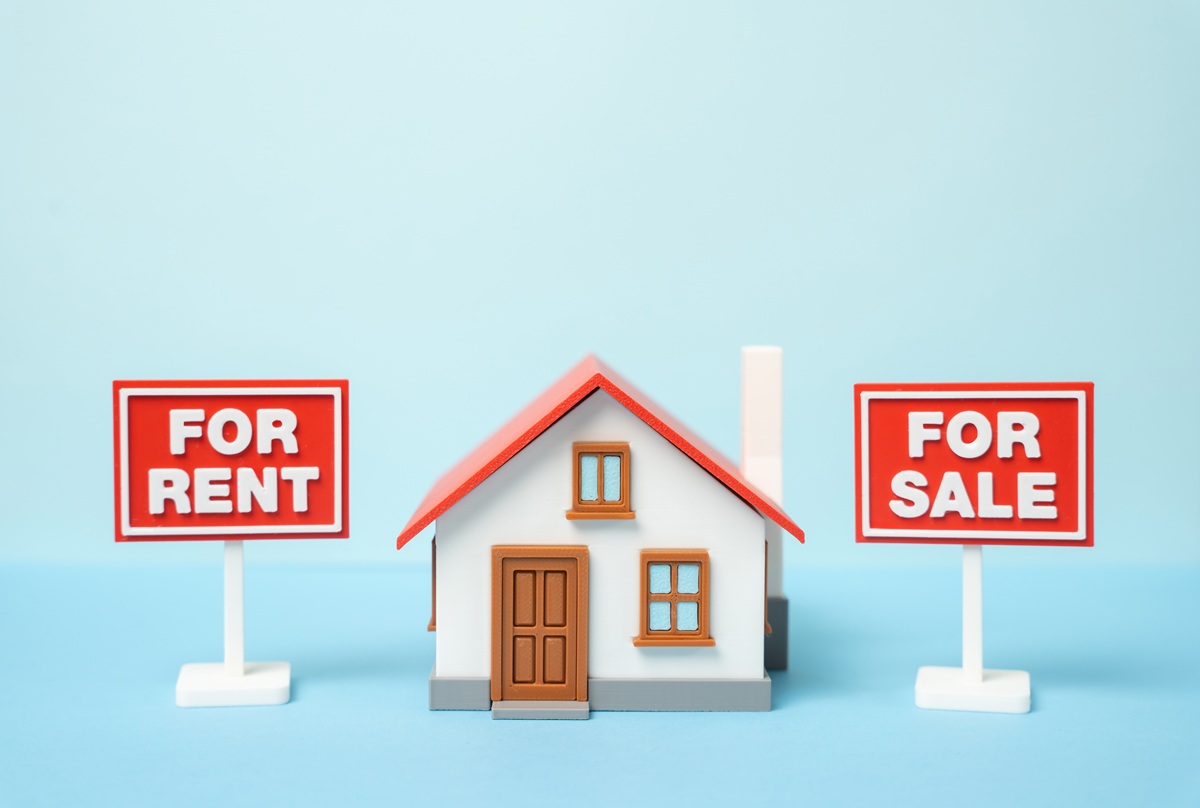
As real estate prices have been growing in Greece lately, many people wonder if it is more beneficial to own or rent a home or another real estate asset.
The answer to this question is not simple and depends on various factors that need to be taken into consideration related to the external environment, the asset itself and the person’s/company’s profile and needs.
1) Level of Central Bank Interest Rates: The real estate market is cyclical and is affected by the decisions of central bankers that want to manage inflation and stir the economy towards a less risky direction. If the rates are high, this usually has a negative influence to real estate prices, while if they are low the supply of cheap money has a positive impact to prices. This means that when rates are high, then it is probably a good period to buy or rent an asset for a long duration, and when rates are low, then it may be a good time to sell or rent for a shorter period of time.
2) Political Stability & Government Policy: A stable country means that there is less uncertainty and that you can plan ahead for the long term, thus owning becomes a more attractive option. Business friendly governments with a competitive tax policy usually attract investments and grow the economy as a whole, including the real estate sector at most times and its prices. Thus in the start of a pro-business government’s tenure (or even before it is elected) it is better to buy or lease for a longer period of time, and towards its end, if the next upcoming government appears to have a risky economic policy or a team that lacks execution skills, it is preferable to sell or rent for a shorter period of time.
3) Location: If the asset is located in an expensive area that has appreciated a lot recently, its probably better to rent. If it is in an area where prices are lower than historical figures, buying makes more sense, especially if some future events may add value (eg. upcoming metro station construction).
4) Condition: If the asset is in a good condition, this means that you will probably have to pay a higher price either for renting or for buying, whereas if it is in a bad condition the price to pay will be lower again in both cases. Thus, renting, being a smaller commitment, is probably a better option if the condition is good, while buying is preferable when renovation works are required.
5) Negotiation: The deal itself is crucial. For the same asset, at a certain price, lease duration and annual rent increase it may be preferable to rent, while for another price it may be preferable to buy.
6) Liquidity: Real Estate is capital intensive and in a competitive environment companies need to focus their resources to their core business. If a strategic reason doesn’t exist for a company to own an asset, then it is usually preferable to rent the assets required to support its main activity (eg. warehouses, offices etc.).
7) Risk Appetite: Real Estate without leverage usually has more modest returns, while other investments exist with more lucrative returns. Therefore, a higher risk profile would probably prefer renting his home, whereas a more conservative investor may prefer owning.
8) Flexibility: This refers to the extent to which one’s needs may change in the following period of time, considering factors such as family status when buying a home for instance. In our Group, although we own and rent office spaces to others as part of our diversified mix of assets, we have taken the strategic decision to rent offices for our own needs, because in a changing environment it is not easy for us to forecast with accuracy the number of our employees in the medium to long term.
Having said all the above, it seems that there isn’t a ‘one size fits all’ answer, but a specific answer for each case.
Hopefully the above framework makes it easier for everyone to decide correctly on this important and sometimes complicated decision!
*Dimitris Zeritis – General Manager at Zeritis Group
