
Linda Rama: The new growth narrative for the Western Balkans


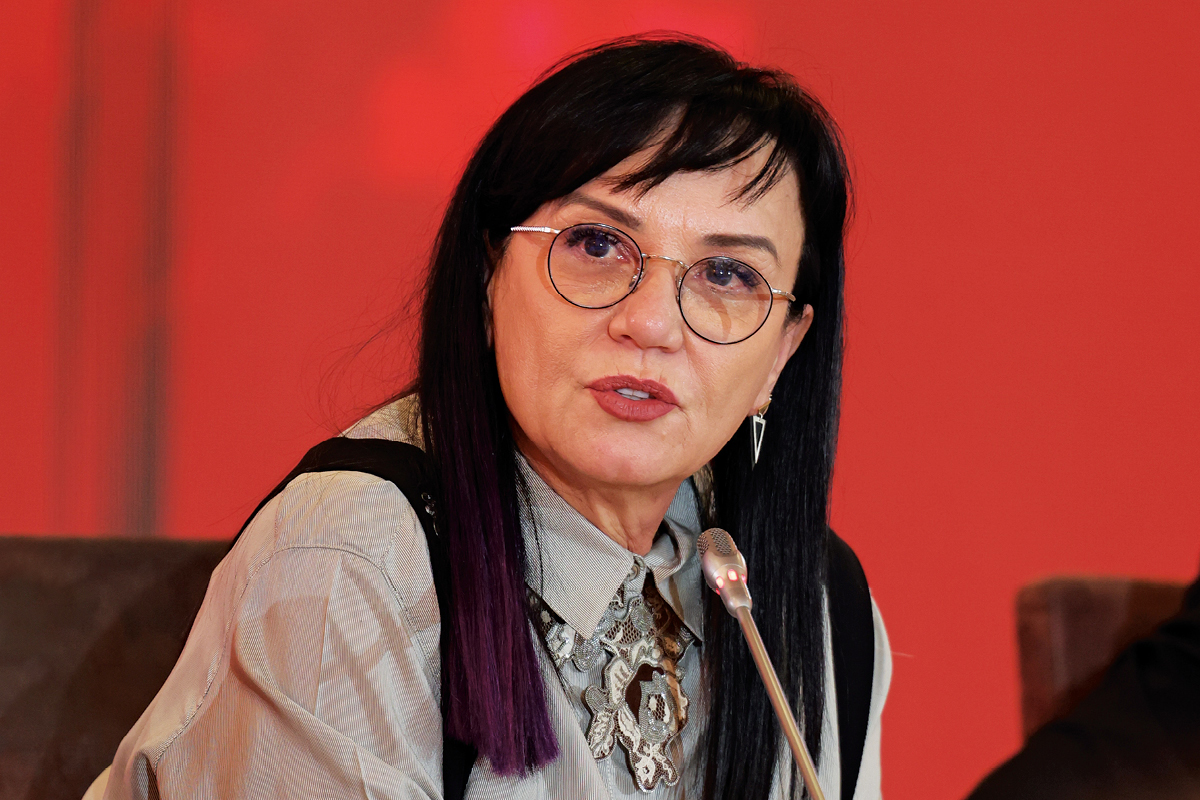

An economist holding a PhD in Economics, Co-Founder of the Center for the Promotion of Human Development in Albania and wife of the Prime Minister of Albania, Edi Rama, she has a rare and extremely penetrating eye. Her many years of action in the field of human rights and social justice have been decisive and go far beyond the borders of Albania, with her perspective constituting a rare insider-outsider “expert view” in the Western Balkans, especially as a “structural economist” with a specialization in issues of social development, culture and skills.
In her interview with Fortune Greece, Linda Rama, highlights that today, the question for the Western Balkans region is whether institutions, businesses and societies can become adaptable enough to thrive both within the EU framework and in a world defined by fragmentation, security pressures, technological acceleration, climate challenges and geopolitical uncertainty.
She considers the new Growth Plan for the Western Balkans a great opportunity, which has increasingly aligned the countries of the region around the same agenda of reforms and economic development. And she points out that the new “playbook” will be written by building institutions that enable trust, businesses that can scale, policies that facilitate the diffusion of innovation and technology through education, and regional cooperation that creates a larger economic space instead of smaller political “compartments”.
The region of Western Balkans is constantly being transformed over time. How much has changed since the 1990s and how would you describe the key phases that the region has been through, bringing us to speed with the present era?
The Western Balkans represents one of the regions that has undergone the deepest political, social, and economic transformations in post-1990 Europe. It can be said without hesitation that the scale of this transformation, in the case of Albania, has been even more profound than elsewhere in the region, particularly when considering Albania’s extreme communist isolation from both the region and the wider world, as well as its deeply underdeveloped pre-communist past. The full magnitude of this historic transformation will only be truly rewarded once the Western Balkans becomes part of the European Union.
Over the last three decades macroeconomic management has generally improved, public finances have become more disciplined, digital public services have expanded, infrastructure connectivity has advanced, and there is a much stronger understanding that governance quality is not a side issue, but the very foundation of economic transformation. Today the question for the region is whether our institutions, our firms, and our societies can become adaptive enough to thrive both within the framework of the European Union, and in a world defined by fragmentation, security pressures, technological acceleration, climate challenges, and geopolitical uncertainty.
So, where do we stand today, in your opinion?
I would say we stand in an intermediate moment. The Western Balkans has passed the phase of basic economic stabilization, but it has not yet entered the phase of sustained and productivity-led convergence with EU, while closing the WB-EU institutional gap remains the “Achilles’ heel” for each country in the region. Speaking of economy, it has become clear that growth alone is not enough.
The composition of growth matters. Its quality matters. Its inclusiveness matters. And above all, the ability to ensure reforms’ sequencing and translate policy into real business and social transformation matters. In this path, the region’s growth is pressured by population shrink, aging and emigration, small market and business size, tight fiscal space, shallow capital markets, labor shortage and skills mismatch and institutions that are often better at control than at coordination. But digitalization and innovation as well as the accumulated human capital investments remain the biggest allies to overcome part of the existing pressure.
When people are asked to picture the Western Balkans, a complex set of memories and (mis)perceptions come to mind first. In many ways, the entrepreneurs who will travel to the region now, will be surprised by the dynamism of the communities, the skills and talent readily available, and the pace of change which seems to be exponential. Perhaps we could say that this has become crystal clear after 2020. Would you agree?
Change in the Western Balkans is becoming increasingly visible, and the region is steadily becoming a better place to live. Let us take the example of Albania. The number of tourists visiting Albania has quadrupled compared to a decade ago, and after 2020 the country experienced a remarkable boom in visitors, giving a new perspective to the tourism sector as well as to many other related sectors. This reality is the result of a modernizing and reform-oriented vision that is materializing more and more every day thanks to the efforts of the state, entrepreneurs, and the communities themselves.
It is also important to emphasize that a changing perception of the region has been influenced by the evolving approach of the European Union toward the Western Balkans over last years. In particular, the EU has sought to avoid repeating the challenges encountered in previous enlargement processes. This is reflected mainly in the new enlargement methodology for the Western Balkans, as well as in the introduction of an additional strategic and financial instrument for the region’s transformation: the new Growth Plan for the Western Balkans. This initiative represents a concrete opportunity that has increasingly aligned the countries of the region around the same agenda of reforms and economic growth, making the region more interconnected while also encouraging competition among each country to advance toward the completion of the EU accession process. From 2023 onward, the agenda became more explicitly geopolitical and accession-linked.
The Growth Plan and Reform and Growth Facility tied money to reform delivery and offer gradual access to elements of the EU Single Market before accession. That is a different stage from the earlier one: more political, more demanding and potentially and more transformative aiming that the region becomes not only more connected, but also more compatible in the way it functions.
The region needs above all not to lose more time and to gain confidence. It remains to be seen how the accession process will evolve, but what is encouraging is the fact that never before has there been so much discussion as in recent years about which of the Western Balkans countries could become the next member of the European Union.
The predominant key in radically transforming our economies, business ecosystems and our productive models is innovation. That said, you increasingly highlight that for our region, it is all predominantly about the diffusion of tech. How does it apply in our case?
We often speak about innovation as if every country must become a frontier inventor. But for most middle-income and small economies, including those in our region, the real economic prize is not invention at the frontier. It is diffusion. The most trasformative question today for the Balkan countries is not whether they can create new technologies. It is about their ability to absorb, adapt, scale, and generalize existing technologies across the whole economy fast enough and broadly enough. That may sound less glamorous than talking about the next Silicon Valley, but in reality it is far more consequential.
The region needs to rise productivity and improve the quality of growth. Productivity does not rise because one or two firms are exceptional. It rises when thousands of firms improve how they produce, manage, export, train workers, use data, and connect to supply chains.
What does this entail in practice by the governments and what by the companies?
First, digitization must go beyond consumer convenience and enter the productive core of the economy: manufacturing, logistics, agriculture, tourism, energy, and business services.
Second, the post-communist profile of entrepreneurs in our countries were ambitious, risk and opportunity takers of a different kind imposed also by both the development stage and problems accompanying transition, but not necessarily capable to embrace the new management practices in the times of tech revolution. Firms today need managerial upgrading as much as they need technical upgrading. A machine alone does not transform a company. New organizational practices, better governance, professional management, and access to markets are a must.
Third, the state has an important role, not as a substitute for entrepreneurship, but as an enabler of diffusion through education, infrastructure, standards, competition policy, and smart public procurement.
Growth alone is not enough. The composition of growth matters. Its quality matters. Its inclusiveness matters.
In the case of Albania, what initiatives of the government do you believe made a difference in recent years?
As far as innovation and tech diffusion are concerned in Albania, in a highly skeptical environment, a decade ago, the government intensified the digital revolution in public services, by making it a priority policy with clear targets and by fully supporting with funds and high-quality human capacities. And from 14 online services in 2013, today there are 1,275 electronic services addressing the needs of 3.5 million citizens and businesses, 850 thousand documents exchanged between institutions for the completion of applicants’ files, 66 electronic registers interconnected between government institutions enabling 70% of the fields in the application forms for public services on e – Albania completed automatically.
This enormous achievement has been recognized by different world evaluation systems ranking Albania among countries with “very high” e – governance development index, and with high maturity Gov Tech maturity index. And the savings in terms of time, money, paper and especially nerves are unimaginable.
The other side of the coin are businesses which are reluctant to move in digitalization and tech diffusion and Albania is steadily creating a new focus which is public support for innovation for which Serbia is a good example being one of the strongest innovation and startup ecosystems in the Western Balkans, especially around Belgrade and Novi Sad. Strong government support through investments in technology parks, startup incentives, tax benefits for IT companies and innovation grants through the Innovation Fund Serbia were important inputs for this advancement. To close, the countries of the Western Balkans need not only to speed up through strong support and engagement the digitalization and innovation agenda, but also to create the model where innovation is no longer treated separately in public administration and private entrepreneurship, but where both sides interact through structured open innovation mechanisms.
What is the correlation between talent and Innovation in our region?
The Western Balkans never lacked human talent or intellectual capacity. On the contrary, the region has consistently produced remarkable individuals across a wide range of sectors — including engineering, medicine, entrepreneurship, design, mathematics, vocational expertise, and digital services. What the region often lacked was not talent, but the economic and social ecosystem capable of fully utilizing and retaining that talent domestically.
Also, innovation in the Western Balkans has emerged not because the region had abundant resources, but precisely because talented individuals were forced to find efficient and creative solutions with limited means. One of the region’s particular strengths is adaptability. Because businesses and individuals have often had to operate in uncertain economic environments, many entrepreneurs and professionals developed a culture of flexibility, problem-solving, and resilience. These characteristics are increasingly valuable in modern innovation-driven economies.
At the same time, the region’s large diaspora has also strengthened this relationship between talent and innovation. Professionals educated or employed abroad increasingly contribute through investment, mentorship, international networks, and the transfer of knowledge and business culture back to the region.
Since tech evolves at such a fast pace, the bet of continuously building talent, upskilling and reskilling human capital become the most challenging part of the equation. In parallel, many talents choose to go abroad. What should be done to stop brain drain?
After the collapse of communism, many countries in the Western Balkans inherited one major comparative advantage: a very young population compared to the European average. In many ways, this represented a significant demographic gift and a major opportunity for long-term development.
Yet, instead of fully benefiting from this advantage, the region gradually lost much of this potential. Initially, this happened through large waves of emigration driven by unemployment, economic insecurity, and political instability. Later, declining birth rates further accelerated demographic pressures. Simply put, the region lacked the economic strength and institutional stability necessary to retain a large part of its human capacities.
It has become clear that without sustainable economic opportunity, it becomes extremely difficult to stop mobility. People naturally move where they believe opportunity, stability, and professional recognition exist. But here I think it is time to have another kind of thinking. Brain drain is real, and it remains costly. Yet diaspora is not only a symptom of loss. It can also be a strategic asset, if we stop thinking about human capital in purely territorial terms.
The question is no longer simply how to keep everyone and talents at home. That is neither realistic nor necessarily desirable. The question is how to turn mobility into circulation, and circulation into development. We need to create domestic conditions that make staying, or returning, a rational choice. People do not leave only because of wages. They also leave because of unpredictability, weak meritocracy, bureaucratic friction, poor research environments, and the feeling that effort is not matched by opportunity. So, the answer to the talent puzzle is not sentimental. It is structural. Better institutions are talent policy. Better cities are talent policy. Better schools and universities are talent policy. A more dynamic private sector is talent policy.
Often, our cultures, and in many ways some of our region’s common cultural traits and characteristics, are in part an obstacle to growth and progress. Are there ways to transform our culture in ways that it promotes scale-up and development?
The cultural question is perhaps the most delicate, because culture is often invoked either too lazily or too fatalistically.
We hear that the region is held back by mistrust, short-termism, excessive hierarchy, fear of failure, informality, or a tendency toward personal networks rather than impersonal systems. There is some truth in these observations. But culture is not destiny. Culture evolves when incentives evolve, when institutions evolve, and when societies begin to reward different behaviors.
If a young person sees that initiative is punished, conformity is rewarded, and rules are selectively applied, then the culture of caution and cynicism will reproduce itself. But if institutions begin to reward competence, transparency, collaboration, and experimentation, then cultural norms also begin to shift.
In other words, culture changes not mainly through lectures, but through repeated experiences of what works and what is valued.
I would also add that the region sometimes underestimates one of its own potential strengths: relational density. The Western Balkans is a space of proximity, linguistic overlaps, shared historical references, intertwined markets, and human familiarity. These can be sources of friction, yes, but they can also be transformed into economic advantage. Regions do not grow only through competition. They also grow through networks, complementarities, and shared platforms.
The question is no longer simply how to keep everyone at home. The question is how to turn mobility into circulation, and circulation into development.
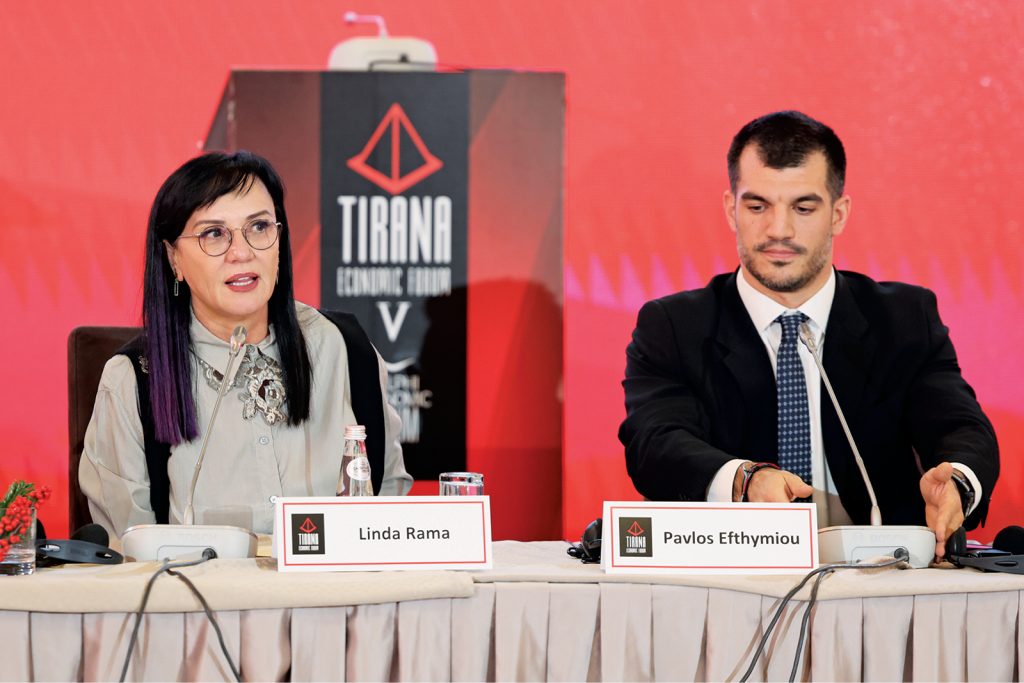
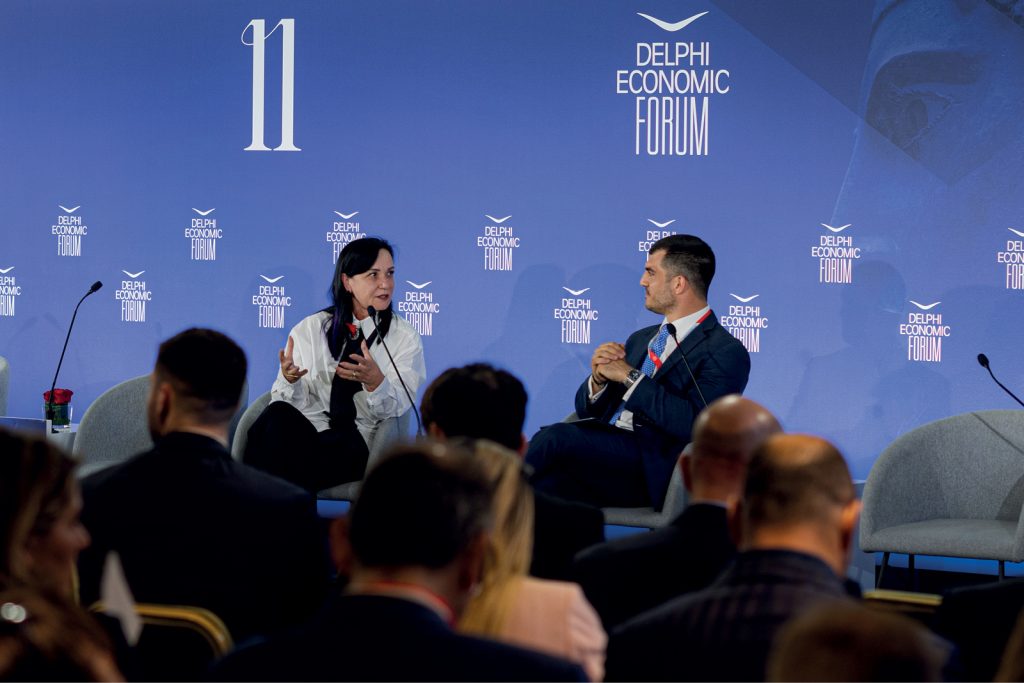
Our region is underpinned by cultural, geographic, and even social and genealogical – sociological proximity. If one looks at the map and all the other aspects mentioned, it seems commonsensical and extremely straightforward that the region’s prosperity would greatly benefit from higher connectivity, another theme that you highlighted both at the Tirana Economic Forum and at the Delphi Economic Forum. Yet, when one studies the actual multilayered ties, there seems to be considerable unexplored and untapped space for synergies and cooperation. How could all this be approached and bridged?
The Western Balkans does not need to become something else in order to succeed. It needs to become more effective at using what it already has: talent, proximity, entrepreneurial energy, adaptability, and a growing awareness that old growth models have reached their limits. And the next chapter for the region will not be written by grand declarations alone. It will be written by whether we can build institutions that enable trust, firms that can scale, policies that support diffusion, and regional cooperation that creates larger economic space rather than smaller political compartments.
If we can do that, then the Western Balkans can move from being seen as a periphery catching up to being understood as a connected, intelligent, and increasingly relevant part of Europe’s future. And that is why there are real grounds for optimism: because the region’s greatest opportunity now lies not in waiting for history to improve, but in learning how to organize itself better. And together.
*Photos: Personal Archive
